What is Assessment?

Assessment is the ongoing systematic process of understanding and improving student learning, which is sometimes described as a reinforcing cycle. The 2023 Provost Conference key note session on, “Capturing Moments of Hope in Your Work as Teacher-Scholar,” highlights one way assessment feeds into faculty thriving. By engaging in assessment work, faculty gain insights about their vocation. When activated, those insights lead to better opportunities for faculty practice and student learning. The cycle repeats itself as part of a culture of continuous reflection. 

This page covers:
Assessment Cycle
3 Components of Work
Assessment Publications
Assessment Support

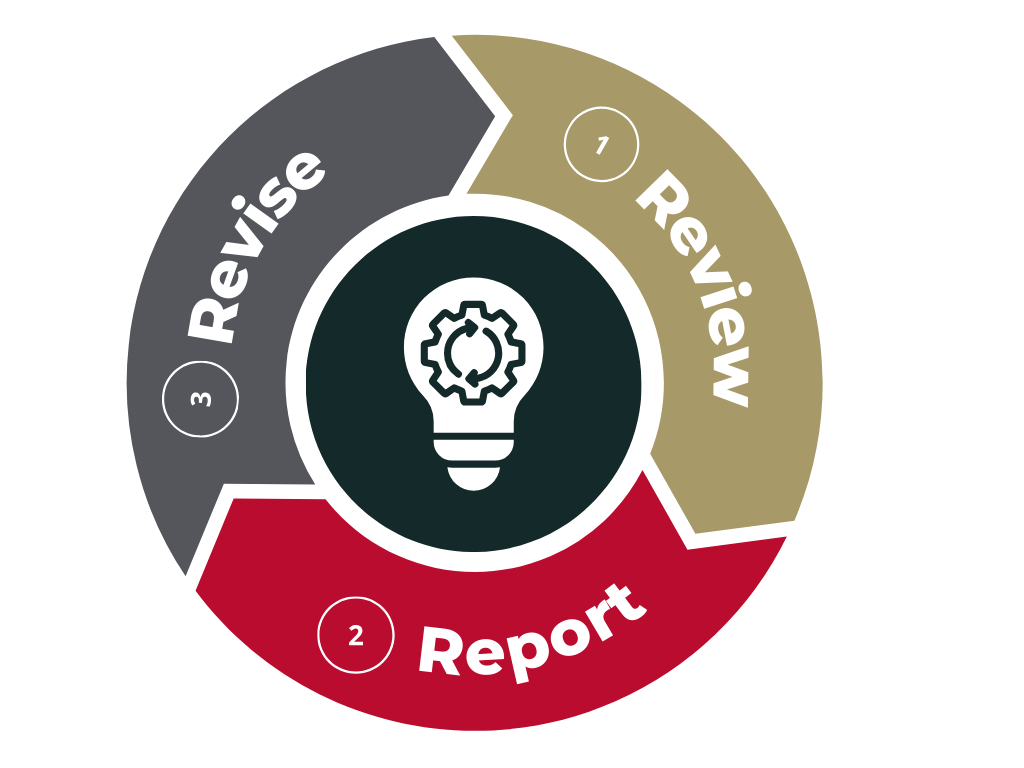
Assessment Cycle: Review, Report, Revise

Assessment Cycle

Assessment is an ongoing process of reflection on student learning. The three steps outlined below have these rough time frames:

Review: Generally review should be done before submitting your annual program assessment report and as you are planning for the coming year’s assessment work.

Report: The reporting window is open from June 1 through Oct. 31st of each year. Program Assessment Reports for completed Academic Year (Summer through Spring Quarters/Semesters) can be submitted at any time during that window.

Revise: Assessment planning should be done before or at the beginning of the academic year. The resources can be used at any time.
3 Components of Work

Part of each faculty member’s critical work, assessment generally entails three key components: 

Articulating Measurable Outcomes

Faculty members articulate what they believe student success looks like in their program. This includes specific, measurable, and attainable outcomes for courses and programs that directly relate to student learning and quality pedagogy. 

RESOURCES:

Gathering Artifacts

Faculty members gather quality artifacts and data from the curriculum that provide evidence of student learning. Artifacts should be gathered from direct sources of engagement that show student progress toward mastery of learning outcomes. 

RESOURCES:

Reflecting & Reporting

Faculty members analyze, reflect upon, and report on the gathered evidence. In return, assessment officers and administrators respond with helpful feedback and changes for how best to highlight successes for accreditation, budget allocation, marketing, and recruiting. (Suskie) 

RESOURCES:

These three components are equally valuable in the cycle of ongoing assessment, whether they are applied at the course or program level. Though program-level assessment is the primary focus of this report, course-level work always informs program goals.

Assessment Publications

Assessment Annual Report

To go in depth on Assessment data, view the Assessment Annual Report prepared by the OTL Director of Assessment, Stephen Riley

Office of Teaching & Learning Annual Report

To learn about Office of Teaching & Learning assessment efforts, view the Office of Teaching & Learning Annual Report.

Need Support?

Stephen

Contact Stephen riley, Director of assessment

For answers to questions about assessment, email Stephen Riley at stephen.riley@du.edu

To go in depth on assessment, schedule a 1:1 appointment